
How can societies pursue healing while confronting ongoing violence, injustice, and collective trauma?
Join leading scholars and practitioners from Israel-Palestine and around the world for two days of interdisciplinary conversation on the future of human encounter in divided societies.
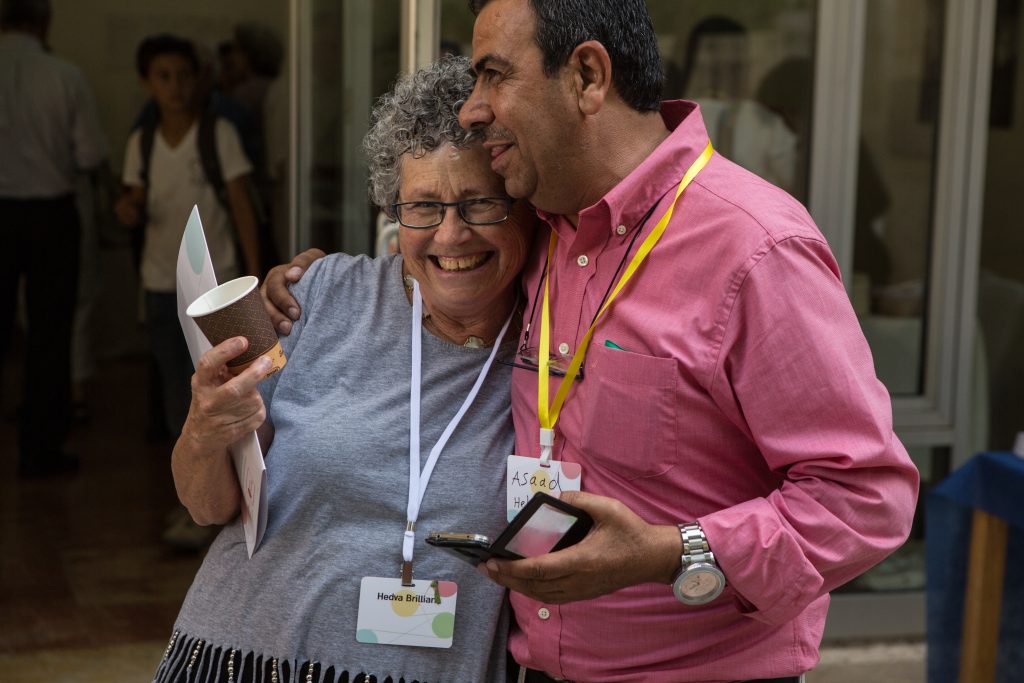
Conference Venues
Monday, November 16: The Van Leer Jerusalem Institute – Ze’ev Jabotinsky 43
Tuesday, November 17: University of Notre Dame, Tantur Campus– Ha-Rosmarin St 1
About the Conference
At a time when communities around the world are grappling with the deep and lasting impacts of violence, polarization, collective trauma, and social fragmentation, there is growing recognition of the need to engage more deeply with questions of healing, memory, moral injury, power, and the rebuilding of human relationships across divides.
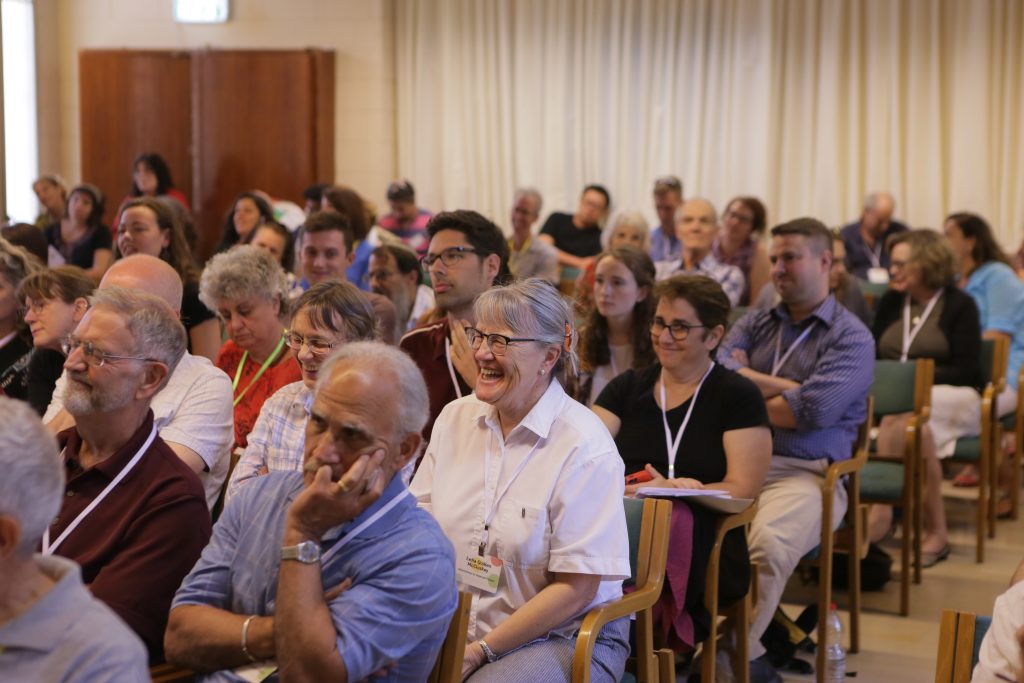
The conference, organized in partnership by the Rossing Center for Education and Dialogue, the Van Leer Jerusalem Institute and the University of Notre Dame Jerusalem will bring together international and local scholars, practitioners, educators, psychologists, religious leaders, artists, and community leaders working across fields such as peacebuilding, trauma studies, conflict transformation, education, ethics, interfaith engagement, and community healing.
The conference will include keynote lectures, interdisciplinary panels, workshops, and reflective spaces exploring themes such as collective trauma and moral injury, power and asymmetry, practices of healing and humanization, education and social transformation, and the possibilities and limits of dialogue and reconciliation work in deeply divided societies.
Early registration is recommended as places are limited.
Conference Program


Workshops
Day 1 | Monday, November 16
Facilitator: Giulia Minoia
Language of facilitation: English
This workshop offers facilitators, changemakers, and community leaders an introduction to the methodology called Social Presencing Theatre (SPT).
SPT is an individual and group practice rooted in embodiment, meditation, and systems thinking. It engages the body’s emotional, physical and spatial intelligence, an intelligence that is innate in all of us. SPT was born from the experience of dancer, teacher, and choreographer Arawana Hayashi and from her work as an activist in the 1960s during the movement for awareness of the rights of the black population in the United States. The practice we will experience – 4-D Mapping – is a process that allows a system to see and sense itself, with the invitation to acknowledge that we all contribute to creating the systems we live in. In 4-D Mapping participants embody the stakeholders in a system to investigate how change happens. Stakeholders in 4-D Mapping are individuals or groups of people who can affect change in the system, who are affected by change in the system, or both.
Facilitators: Gal Eblagon and Vivian Rabia
Language of facilitation: Arabic/Hebrew
When communicating with others, particularly across different identities and backgrounds, we often rely on automatic patterns that limit our capacity to listen and shape our responses to conflict. In this workshop, we will introduce the “Mindful Listening House” as a practical tool and explore its applications, as developed within the Rossing Center’s Healing Hatred methodology. We will explore how mindful listening helps us recognize these patterns and expand the possibilities for listening and meaningful encounter, even in contexts of conflict and collective trauma.
Through an experiential sharing and reflecting exercise, participants will practice mindful listening and active witnessing of each others’ experiences, followed by collective reflection on its application in Israeli-Palestinian dialogue.
Facilitator: Erez Bar
Language of facilitation: Arabic/Hebrew
EMDR 4 PEACE brings together Israeli and Palestinian therapists, guided by the belief that healing trauma is an essential foundation for reconciliation and peace. In this experiential workshop, we invite you to take a moment for yourself within our challenging reality. Through a guided group process based on EMDR, you will experience tools for emotional regulation, processing distress, and reconnecting with your inner strengths and resources. The workshop offers an opportunity to engage in a personal process within a shared space. There is no need to share your story or agree with others. Each participant follows their own journey while being part of a group. Together, we will explore how to move from distress toward stability, reconnect with our strengths, and imagine a more hopeful future. The workshop will be jointly facilitated in Hebrew and Arabic by a Jewish and an Arab therapist.
Facilitator: Rana Simaan Jubran
Language of facilitation: Arabic/Hebrew
This experiential workshop explores how creative tools (Photo-Voice, Media, AI & TED-style storytelling) foster personal and collective hope, self efficacy, and collective efficacy during acute crises. Focusing on Photo-voice, the session demonstrates how participant-generated photography serves as a reflective third space for intergroup dialogue, trauma processing, and shared existence. Drawing on field implementations with Jewish and Arab residents in mixed cities during the Iron Swords War, the workshop shows how images bridge polarized experiences and dismantle monolithic narratives. Participants will engage in a hands-on Photo-voice simulation: selecting images, framing reflections, and practicing facilitated inquiry to experience how visual storytelling unlocks empathy. Attendees will gain actionable insights and an adaptable toolkit applicable to social work, community action, conflict transformation, and research.
Facilitator: Sharon Rapaport
Language of facilitation: English
A practical, trauma-informed workshop that invites participants to explore how another person or community may understand the same reality differently. Working in groups of four—an interviewer, an interviewee and two observers—participants receive an everyday object, a photograph, or an artifact. These become a gentle entry point into a fictional story told from a perspective other than one’s own. Rather than debating positions or asking for personal disclosure, the group explores memory, belonging, fear, loss, relationships and hope through concrete details. The interview is followed by attentive observation and reflection. Participants consider what it felt like to tell a story from an unfamiliar point of view, and what changed when they listened from the other side. They notice the questions they asked, the assumptions that appeared, and what remained unspoken. The workshop does not claim to reproduce another’s experience. Instead, it creates a space for curiosity.
Day 2 | Tuesday, November 17
Language of facilitation: English
Facilitator: Rabbi Naomi Kalish
While many believe that people – and peoples – have a responsibility to work towards peace even when conflicting parties use hateful and dehumanizing rhetoric and even when there are disparities in power, how to do so is not clear. This experiential session introduces participants to the theory and practice of breaking cycles of violence through forming compassionate relationships as the foundation for peacebuilding. This approach is grounded in a radical form of listening. We will explore models of relationship building across power disparity and asymmetry that promote healing and humanization from sources including sacred texts, insights from psychiatrist James Gilligan from his work with prison populations, insights from the ethics mediation method developed by Nancy Dubler and Carol Liebman, and insights from the field of Spiritual Care and Counseling. Participants will engage in a facilitated storytelling and listening activity and have the opportunity to reflect on their experience.
Language of facilitation: Arabic/Hebrew
Facilitators: Nimala Kharoufeh and Yasmin Rimer
In this workshop, we will explore how different identities shape our lived experiences within a reality of conflict, violence, and oppression, and how they manifest in the group encounter. We offer a gentle and practical entry point to a deeper conversation on identity, power dynamics, and collective trauma within the dialogical space. During the workshop, participants will engage in a focused identity-mapping and exchange exercise, examining which identities are present in the room and which remain silenced or missing. Through real-life scenarios and an exploration of the collective identity map, we will examine how dynamics of power, privilege, and oppression are reflected within the group’s dialogical space. This workshop offers a practical, dialogue-based educational tool suitable for facilitators, educators, and anyone curious to explore diverse lived experiences and learn practices for trauma-informed dialogue.
Language of facilitation: Arabic/Hebrew
Facilitators: Raheeq Haj Yahia Suleiman and Hila Haba Ashkenazy
In times of war, when pain exceeds the power of words, we often need another language. This experiential workshop invites participants to connect through drama, movement, voice, play, and improvisation—expressing what words struggle to convey. Through a bilingual, intercultural encounter combining playback theatre and psychodrama, we offer a safe space for personal stories and experiences to be told, seen, and transformed into live performance. Rather than ignoring differences, we hold space for pain, loss, fear, belonging, identity, and the contradictions within us. Can we listen to another person’s story without abandoning our own? Can theatre create a space where we can meet, even when words seem insufficient?
The workshop Kan ve-achshav (Once Upon a Time and Now) invites a human encounter through psychodrama and playback theatre—a space to come closer to ourselves and others, where experiences can be expressed and heard.
Language of facilitation: Arabic/Hebrew
Facilitators: Dr. Naftali Halberstadt and Dr. Ekhlas Mulla
The CMBM philosophy, first developed by Dr. James S. Gordon, is based on the belief that all people have the capacity to understand, help, and heal themselves. When we share this process of healing with others, we serve our highest purpose and facilitate the most life enhancing and enduring changes. In this workshop we will first present the conceptual basis for this work, presenting the CMBM model of A New Medicine and then provide an Introduction to Mind-Body Skills Groups. We will briefly describe the work we have been doing in Israel since October 7, 2023 with Hebrew and Arabic speaking groups. With the remaining time the participants will experience a number of the techniques that are used as part of our skills training groups.
Time will be allotted for questions and comments from the conference participants.
Language of facilitation: English
Facilitator: Ilana Shtivelman
This workshop centers the relationship between individual and collective moral responsibility in the face of the global rise of antisemitism and other forms of societal violence. Participants will explore a central question: How does our distance from harm shape our interactions with ourselves and others? Here, moral witnessing is explored via the journey of: The Self/One’s Positionality → Distance → Others → Tension → Dialogue → Community → Action/Responsibility. Through this workshop, participants will be able to: (1) Articulate and distinguish key concepts of the workshop (i.e.: witnessing, moral injury, wellbeing, distance, etc.); (2) Examine how different forms of distance and proximity shape tensions, witnessing, potential moral injury, and responsibility for action; (3) Practice holding competing moral perspectives, particularly universalism and relativism, while engaging productively with various tensions; and (4) Actively translate introspection into sustainable practices of self-care, dialogue, and advocacy/action.
Healing Hatred Training (18-20 November 2026)
Following the conference, the Rossing Center for Education and Dialogue will offer an optional three-day training workshop introducing the Healing Hatred methodology, a trauma-aware approach developed in Israel-Palestine that integrates mindful listening, active witnessing, and exploration of the spiritual and existential dimensions of conflict.
The training will provide participants with an introduction to the methodology and its facilitation framework, enabling them to apply and adapt the approach within their own educational, dialogue, and community settings.
Designed for international practitioners, the training is conducted in English. Places are limited, and applications will be reviewed to create a diverse international cohort.
Registration for the training is over.